Locations & map
Plot permitted locations, contacts, and travel distance from your newsroom base — one map instead of a folder of screenshots.
Location scouting & production management
Callsheet gives newspapers, magazines, and agencies a shared workspace to scout locations, schedule shoots, and coordinate freelancers — built for desks running tighter cycles with fewer people.
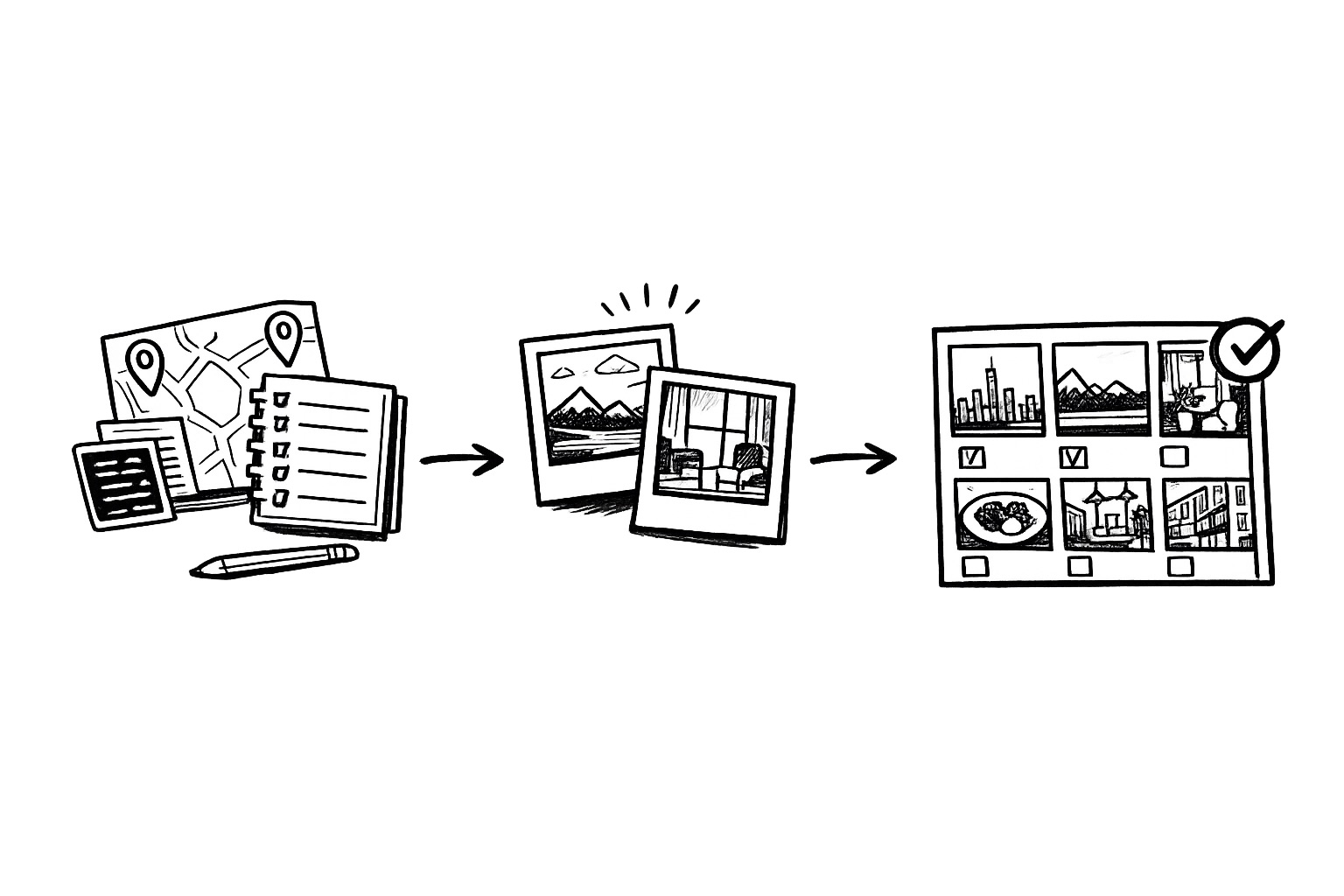
Plot permitted locations, contacts, and travel distance from your newsroom base — one map instead of a folder of screenshots.
Book shoots on a shared calendar, export ICS for the desk, and see conflicts before they reach the page.
Keep freelancers and sources on the project, attach scout and shoot media, and hand off with notes the whole desk can read.
The problem
When a weekend magazine moves from a five-day production cycle to three, the photo desk is often the bottleneck. Editors spend the first hours of the morning sorting location options, cross-referencing freelancer availability by email, and copying notes into a thread the whole desk will not read until noon. The workflow worked when someone owned assignment full-time. When that role is absorbed into other jobs, the process does not shrink — it fragments.
Callsheet does not replace editorial judgement. It gives the desk a shared record of locations, schedules, and contacts so the handoff from scout to shoot to publish is visible to everyone who needs it.

01
Drop pins for restaurants, landmarks, and permit-sensitive sites. Filter by status, distance to home base, and assigned photographer. Print or export when the desk needs a paper copy.

02
Schedule shoots with start and end times, link them to locations, and spot overlaps before assignment. Export to ICS when editors still live in Outlook or Google Calendar.
03
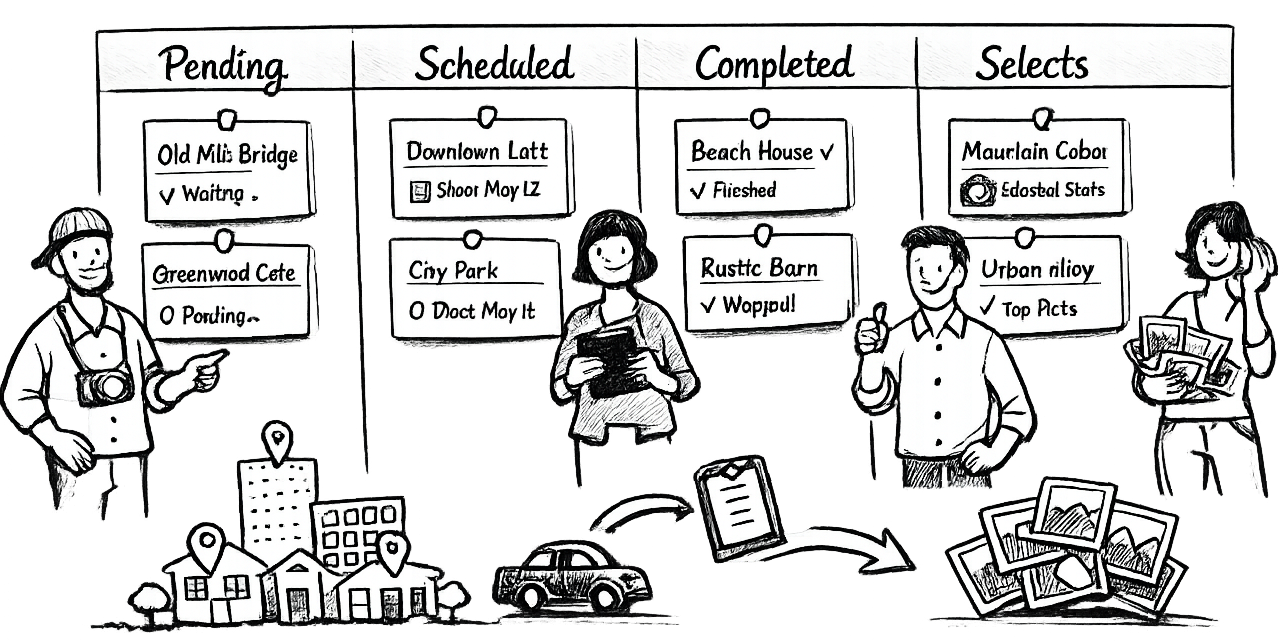
A kanban-style board of locations by status — pending, scheduled, shot, published — with filters for photographer, writer, and editor so the photo desk knows what needs action today.

04
Upload reference frames from scouting trips and selects from the shoot. Rate, sort, and export PDF contact sheets without emailing ZIP files across the newsroom.
Customers
Newsrooms and magazines use Callsheet to keep location scouting, scheduling, and shoot handoffs in one place.
Production teams use Callsheet to coordinate location scouting and shoot scheduling across daily and weekend features.
Editorial and design desks use Callsheet to keep shoots, locations, and freelancer contacts in one shared workspace.

Founder
Andrew is a photographer whose editorial and commercial work appears in Vanity Fair, The New Yorker, Condé Nast Traveler, Monocle, and Wallpaper*. He built Callsheet from years of coordinating shoots, locations, and crews — the same handoffs that break when a photo desk runs on email and spreadsheets.
Read the full storyCreate an account with your work email, confirm via the link we send, then create a company workspace for your newsroom. Personal workspaces stay free for solo use (you plus one collaborator). Company workspaces include a three-month free trial with unlimited team seats after you add a card.
Yes. The product is a responsive web app — map, calendar, and overview are usable on phones and tablets in the field.
Schedules in Callsheet export to ICS. Many newsrooms keep Outlook or Google as the master calendar and pull shoots from Callsheet exports.
Callsheet runs separate regional deployments. Choose where your workspace data is hosted — Canada, the United States, or the European Union. See the pricing page for details.
Email support@callsheet.im. We respond to production teams directly — no ticket portal required for workspace issues.
Create a company workspace in minutes. Personal accounts stay free for solo use.